
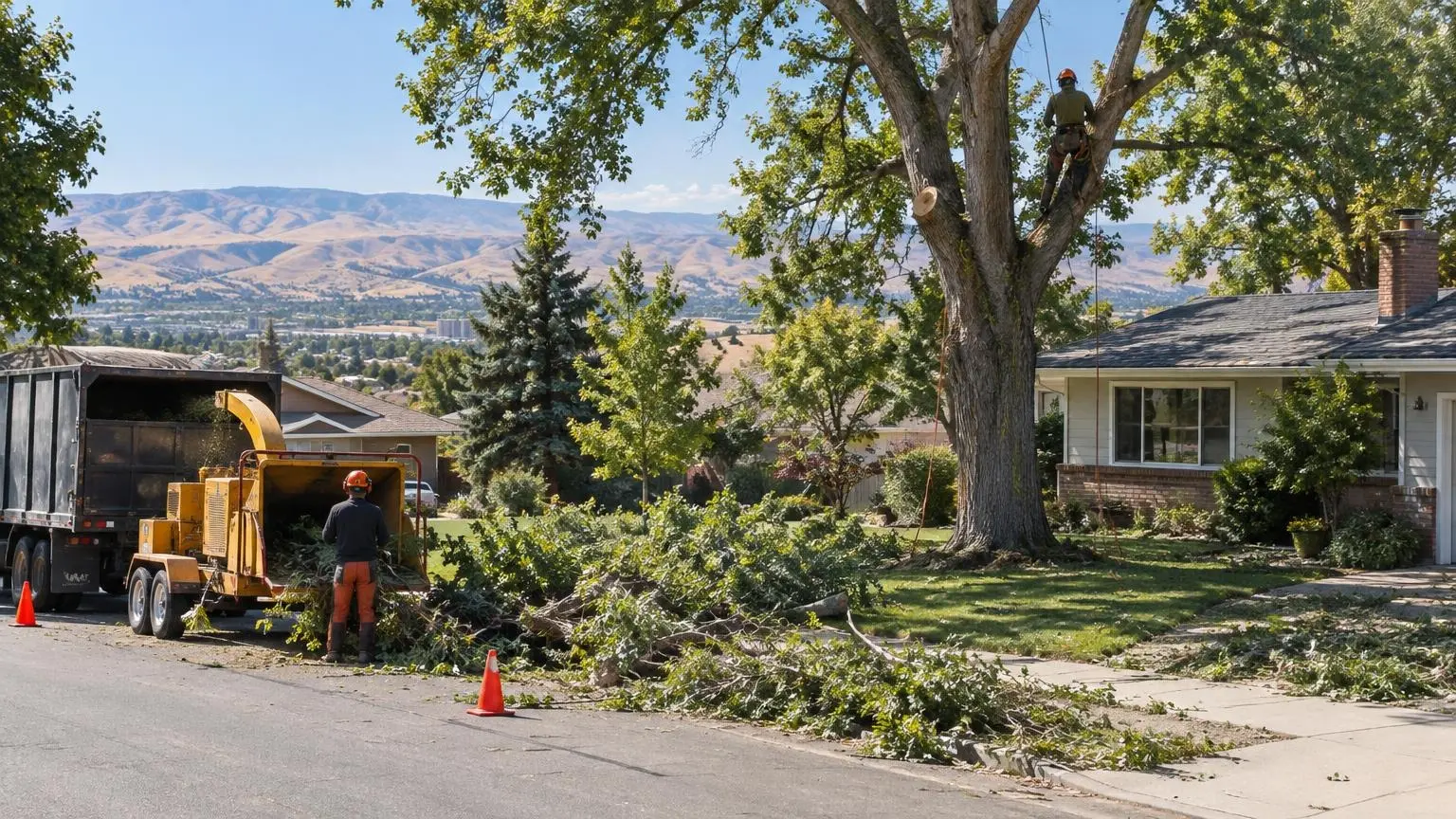
Where Boise first heated homes with hot springs water
Tree Service in Boise Warm Springs, ID
Mature trees around some of the oldest houses in the city, between the foothills and the river.
- No-cost estimates at your property in Treasure Valley and Ada County
- Quotes in writing, broken out per tree
- We settle what leaves the property before we start
An Avenue of Old Homes and Old Trees
Tree Service in Boise Warm Springs neighborhoods centers on some of the oldest residential property in the city. The Warm Springs Avenue Historic District, listed on the National Register in September 1980, covers 53 acres and 96 contributing houses built between 1870 and 1940. In 1892, Christopher W. Moore built the first large house on the avenue; he owned the Boise Artesian Hot and Cold Water Company, and his home is described as the first residence in the United States heated geothermally. Hot water from a fault line still warms many Boise homes in this part of town.
Mature trees on prominent lots
Warm Springs Avenue is one of the streets Boise is known for as a tree-lined drive. Large trees here frame houses that people slow down to look at, so the standard for pruning is high. Good work leaves a tree looking natural: cuts made at the branch collar, deadwood removed, weight reduced on limbs that reach over the roof, and no stubs or topping. Heavy-handed pruning on an avenue like this is visible for years.
Between the foothills and the river
The area sits on the east side of the city, with the foothills rising to the north and the Boise River to the south. The river is wooded through Boise and lined by its greenbelt. East of here, the Eckert Diversion Dam sits just above Barber Park, about five miles from downtown, and Lucky Peak Dam, finished in 1955, controls flows from upstream. Trees on lower ground toward the river can have high water tables in spring, while those on higher ground near the foothills dry out faster in summer. Both affect how trees grow and how they hold in wind.
Old trees near old foundations
Houses built between 1870 and 1940 often have stone or brick foundations, older sewer lines and detached outbuildings near the alley. Large tree roots grow toward water and loose soil, so they often find their way into those spaces. Before any removal near a historic foundation, we plan how the trunk and stump will come out so the ground around the house is not disturbed more than necessary. Stump grinding is usually far gentler on a nearby foundation than pulling roots out.
Historic district steps
For homes in a Boise historic district, removing a tree is one of the projects that needs a Certificate of Appropriateness, and the review is handled either by staff or at a Historic Preservation Committee hearing depending on the district and the scope. Pruning to keep a tree healthy is usually the first option to consider. When removal is the right call, a written description of the tree's condition and defects helps the application.
Services in Warm Springs and east Boise
- Fine pruning of mature trees to ANSI A300 practice
- Deadwood removal and end-weight reduction over historic roofs and porches
- Careful sectional removal when a tree has failed or is unsafe
- Stump grinding with lawn restoration in mind
- Pruning for clearance over the street, sidewalk and driveway
Call (208) 369-9847 to set up a walk-through. Get a free estimate
Warm Springs Facts
- Historic district. The Warm Springs Avenue Historic District was added to the National Register on September 22, 1980, and includes 96 contributing houses built from 1870 to 1940 on 53 acres.
- Geothermal first. Christopher W. Moore's 1892 house on Warm Springs Avenue is described as the first residence in the United States heated geothermally, using water from his Boise Artesian Hot and Cold Water Company.
- Upstream dams. The Boise River above the city is regulated by Lucky Peak Dam (1955), Arrowrock Dam (1915) and Anderson Ranch Dam (1950), with the Eckert Diversion Dam just above Barber Park.
- A permit step for removals. In Boise historic districts, tree removal requires a Certificate of Appropriateness; staff-level reviews take 15 days, notify neighbors by mail and carry a 10-day appeal period.
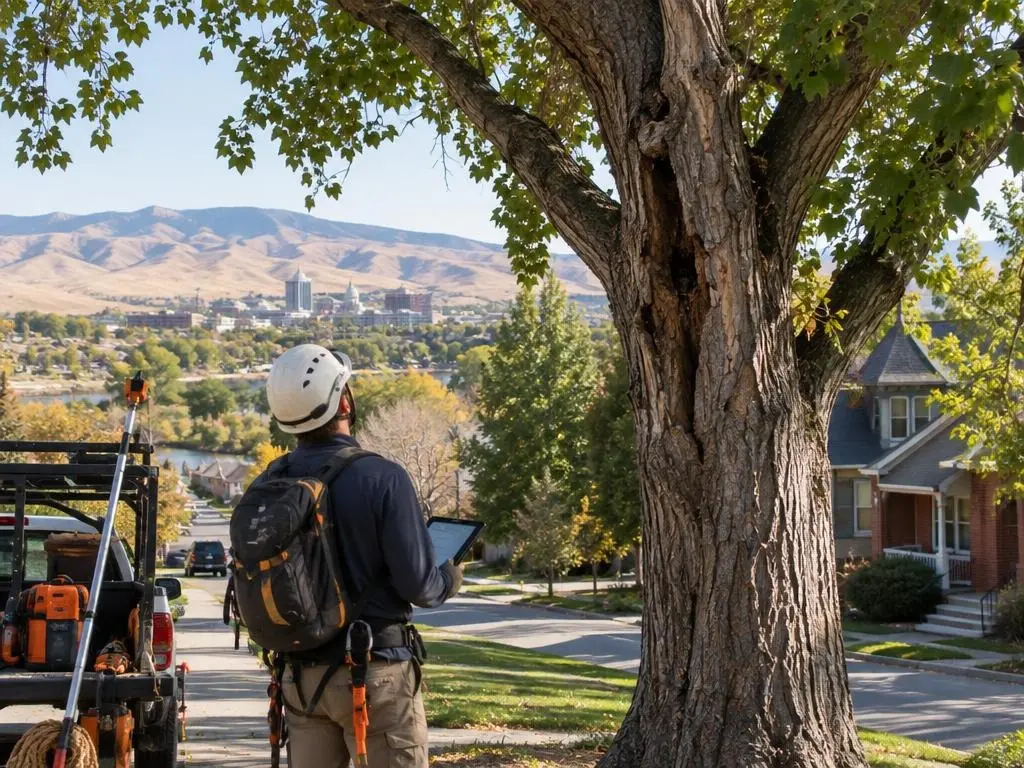
Our Services in Boise Warm Springs, ID
Boise Warm Springs Questions
How often should the big trees on a Warm Springs property be pruned?
For large mature trees, a careful pruning every three to five years keeps deadwood and end weight under control. The right interval depends on the species, its condition and what it hangs over.
Will pruning change how the tree looks from the street?
Done properly, it should look like the same tree, just cleaner. We remove dead and weak wood and shorten long limbs back to proper side branches rather than cutting the crown flat.
Do I need approval to remove a dead tree at a historic home?
Tree removal at a home in a Boise historic district is on the list of projects requiring a Certificate of Appropriateness. Contact the city's historic preservation staff about your property before scheduling the work.
Free Estimates in Boise Warm Springs, ID
Free estimates along Warm Springs Avenue and across east Boise.
Tree Service Near Boise Warm Springs
- Tree Service in Boise, ID
- Tree Service in Meridian, ID
- Tree Service in Nampa, ID
- Tree Service in Eagle, ID
- Tree Service in Kuna, ID
- Tree Service in Star, ID
- Tree Service in Garden City, ID
- Tree Service in Caldwell, ID
- Tree Service in Middleton, ID
- Tree Service in Emmett, ID
- Tree Service in Hidden Springs, ID
- Tree Service in Avimor, ID
- Tree Service in Melba, ID
- Tree Service in Horseshoe Bend, ID
- Tree Service in Boise North End, ID